

Q2 2026 Exterior Rendering Trends: 7 Shifts Builders Should Watch Right Now
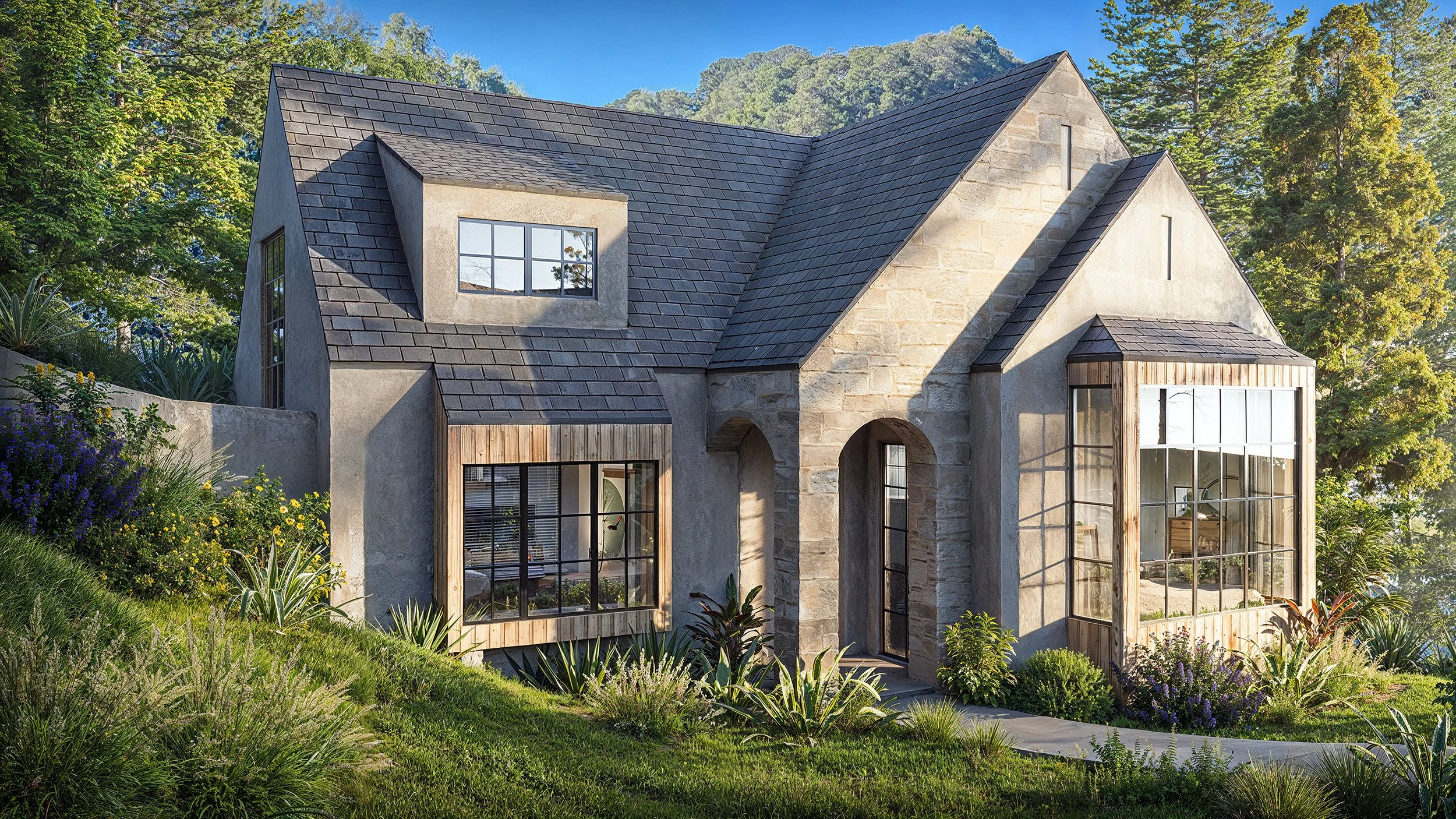
High-end Exterior Landscaped Residential Rendering
If you work in residential design or development, the exterior rendering trends 2026 buyers care about right now are not random style swings. They are tied to how people want homes to feel, perform, and sell in Q2 2026.
That means the strongest exterior renderings today are doing more than showing a front elevation. They are helping builders, architects, and developers communicate curb appeal, material strategy, outdoor living, and overall lifestyle value before the home is built.
Here are seven Q2 2026 shifts worth watching.
1. Warm contrast is replacing the flat all-white look
One of the clearest 2026 design shifts is the move away from stark, sterile exteriors. Warmer neutrals, moodier greens, taupes, black accents, and more layered contrast are showing up more often in current residential design coverage.
For renderings, that means lighting and materials have to work harder. A darker or warmer palette can look rich and current, or it can look heavy and muddy. The difference is in how the scene is built and lit.
2. Mixed materials are becoming the baseline
Homes are looking more layered in Q2 2026. Instead of one dominant finish, more exteriors are combining stone, siding, wood tones, darker window systems, and metal accents. The broader 2026 trend conversation points toward more tactile, natural, and high-performance material combinations.
That is important for rendering because buyers do not just want to know the shape of the home. They want to understand how the materials work together and what kind of value the exterior is signaling.
3. Outdoor living has become part of the hero story
Outdoor space is not a bonus anymore. It is a major part of how homes are sold.
Recent 2026 outdoor living coverage points to multi-zone outdoor areas, stronger indoor-outdoor flow, low-maintenance materials, and spaces designed for entertaining, dining, lounging, and wellness.
For residential rendering, that means a builder should not rely on one standard front shot. In many cases, the stronger image is the rear elevation, covered patio, poolside angle, or twilight view that shows how the home actually lives.
4. Bigger glass and stronger connections to light are showing up everywhere
Large windows, bigger openings, and more intentional relationships between interior and exterior spaces are central to current 2026 home design reporting. Windows and doors are being treated as major design features, not background elements.
That has a direct impact on rendering. Glass has to read believably. Reflections, interior glow, sightlines, and shadow all need to feel convincing if the exterior image is going to look current.
5. Performance-minded exteriors matter more now
Current exterior design coverage is not only about style. It is also about durability, low maintenance, energy performance, and long-term value. That includes more emphasis on resilient materials, better window and door performance, and exteriors that feel built for real-life conditions.
That is useful in renderings because the image can help communicate that a home is not just attractive. It is current, practical, and built with long-term value in mind.
6. Landscaping and context need to feel more believable
A home floating on an empty lot does not do much sales work anymore.
The stronger exterior renderings in Q2 2026 are giving more attention to context: trees, planting, hardscape, adjacent grading, outdoor furniture, and realistic lot placement. That supports the broader move toward homes that feel more grounded, personal, and livable.
This is one of the easiest ways to make an image feel more current. Buyers respond better when the home feels placed, not pasted.
7. Faster rendering workflows are becoming part of the expectation
Even when the final image still needs a trained eye, speed matters more now. AI-assisted rendering workflows and more efficient production pipelines are changing how quickly teams expect first looks and polished finals. Broader 2026 visualization coverage continues to point in that direction.
That is one reason Parker Haus is positioned the way it is internally. Tom described the Parker Haus side as a more set residential pipeline built around simpler documentation, usually CAD or SketchUp, with established camera views, a smaller lighting menu, clay approvals, and a tighter revision path.
Final takeaway
The best exterior rendering trends 2026 are really about one thing: clarity.
Homes need to feel warmer, more livable, more performance-minded, and more complete. That is what builders and developers are trying to show right now, and that is what the best residential renderings should support.
If your team is producing homes in Q2 2026, these are the shifts worth building around.
Need exterior renderings that match the market right now?
Parker Haus helps builders, architects, and residential developers create photoreal exterior imagery through a streamlined residential workflow. Internally, that workflow is designed around simple source files, repeatable camera and lighting setups, and a review process that keeps jobs moving without overcomplicating the work.